
By Lucy Ponsonby, Chief People Officer, Opus Talent Solutions
Let’s be honest – scaling is messy. If your technology outpaces your people, you risk burnout: quality dips, and culture debt builds up fast. But if your team grows faster than your platform, you’re likely hiring into chaos: inefficiency creeps in, churn spikes, and you miss the moment.
In 2025, with AI accelerating everything and regional investment reshaping the UK tech landscape, the smartest leaders aren’t choosing between tech or talent. They’re sequencing both – strategically, deliberately, and with a clear eye on what comes next.
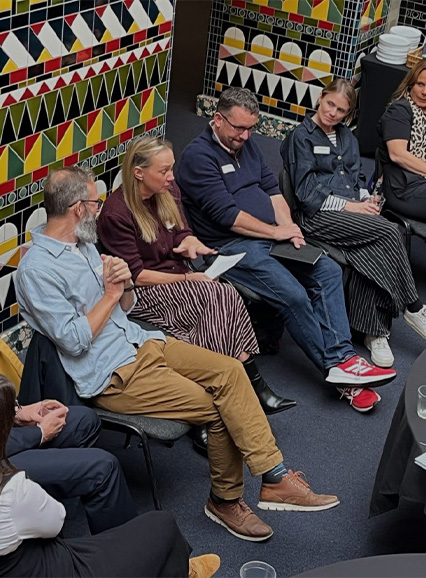
That’s exactly what we explored at our recent roundtable during Bristol Tech Festival. Below is a practical playbook shaped by the on-the-ground lessons discussed on the day and the latest data across the South West & South Wales.
Stop Thinking in Either/Or
Scaling tech vs. scaling teams isn’t a binary decision – it’s a rhythm. The most effective organisations move through a loop: stabilise systems, standardise processes, automate the repeatable, augment people with tools, upskill for higher-value work, and then scale both the org and the platform in sync.
It’s not about doing everything at once. It’s about placing the right bet next.
How Do You Know What to Scale?
There are some clear signals. If your systems are slowing things down, such as requests piling up because environments aren’t ready or data isn’t accessible, then it’s probably time to invest in tech. Same goes if quality is slipping due to manual handoffs, or if your cost-to-serve is rising because work is still too hands-on.
On the flip side, if decisions are bottlenecked because you don’t have enough product managers or analysts, or if your teams are juggling too many domains with unclear ownership, it’s time to grow your people. Long onboarding times, declining engagement scores, and strategic backlogs are also signs that your team needs attention.
Here’s a simple rule: if the problem is coordination and judgment, scale your people. If it’s latency and repeatability, scale your tech.
What the Market’s Telling Us
The numbers speak volumes. UK AI startups got off to a record-breaking start, raising over $1 billion in the first quarter of this year alone. But here’s the catch: the journey to Series C funding when a company is ready to scale aggressively, is getting longer.
This means startups need to be far more strategic about how they grow. You can’t afford to scale tech blindly or prematurely. Every investment in automation, infrastructure, or platform capability needs to be tied to clear outcomes and sustainable growth.
At the same time, the talent landscape is shifting. Firms are struggling to hire with 60% citing the skills gap as a barrier to transformation. While diversity is also lagging with only 29% of UK tech workers identifying as female or non-binary.
Hybrid working is now the norm, with 41% of employers formalising hybrid working policies, however, push too hard on return-to-office, and you’ll face resistance. Less than half of UK workers are willing to comply with full-time office mandates.
All of this reinforces the need for balance. You can’t scale tech without the right people and you can’t scale people without the right tech. The winners will be those who know when to invest in each, and how to make those investments work together.
What Breaks First When You Scale Too Fast?
Culture usually goes first. Then clarity. Then control.
When organisations scale rapidly, it’s tempting to focus on systems, headcount, and delivery. However, if you neglect culture, everything else starts to wobble. Push return-to-office mandates without a clear purpose, and you’ll face resistance. Hire ahead of process, and you’ll amplify inconsistency. Over-automate, and you risk losing the human touch that builds trust with customers.
But here’s the nuance: culture isn’t static. It’s okay, and often essential, for your values and ways of working to evolve as you grow. A startup culture built on hustle and spontaneity may not suit a 500-person organisation. What matters is having a clear purpose that runs like a golden thread through everything you do. That purpose helps people understand why change is happening, and how they fit into it.
Scaling isn’t just about adding tech or talent, it’s about bringing your people with you. That means communicating openly, listening actively, and making space for your culture to mature without losing its soul.
Hiring in a Red-Hot Market: Build, Buy, or Borrow?
Bristol and the wider South West are fiercely competitive for software, data, and GTM talent. The smartest play? Mix your strategies. Build through apprenticeships, mid-career reskilling, and internal mobility. Borrow through partners and contractors. And buy when speed matters – think acquisition hires or targeted senior hires.
With three-quarters of UK employers still reporting recruitment challenges, owning your talent pipeline isn’t optional, it’s survival. That’s where alternative recruitment models come in. Solutions like RPO (Recruitment Process Outsourcing), MSP (Managed Service Provider), and Recruit, Train & Deploy programs can give you the flexibility to scale quickly, reduce risk, and access niche skills without overextending internal resources.
Whether you need speed, scalability, or sustainability, designing a blended approach that combines strategic hiring, contingent workforce solutions, and future-ready talent development, can make sure your talent strategy keeps pace with your growth.
Automation vs. the Human Touch
Automate the invisible toil, such as provisioning, regression tests, reconciliations, and case triage. Use automation to support work that relies on judgment, not replace it. And always keep a person involved for exceptions, regulated decisions, and those moments that really build customer trust. Make sure explainability and easy escalation are baked into your product from the start.
Equip People to Work With New Tech (Not Around It)
Upskilling can’t be an afterthought, it must move as fast as your tech. A focused 90-day sprint can make a huge difference.
Start by building fluency. In the first month, get everyone speaking the same language with AI and data literacy. For customer-facing and ops teams, throw in some prompt-engineering basics so they can actually use the tools, not fear them.
Next, move from theory to practice. In month two, co-create. Pick three to five “no-regrets” automation pilots, such as in operations, finance, or customer service, and pair business owners with engineers. This isn’t about experiments or side projects; it’s about solving real pain points together.
By month three, it’s time to industrialise. Double down on the pilots that delivered the best return on investment and scale them, putting governance in place and publishing blueprints so the success lasts.
And don’t forget the why: tie all of this to internal mobility and time-to-competence goals. If you can cut onboarding time by 25 – 40%, you’re not just keeping up with tech – you’re getting ahead of it.
Leadership Change and Investment: Turning Disruption into Momentum
Change at the top, whether it’s new leadership, fresh investment, or a shift in ownership, can feel unsettling. But handled well, it’s one of the most powerful levers for growth. Private Equity backing, for example, often brings more than capital: it brings operational expertise, sharper governance, and a proven playbook for scaling. The same applies when new leaders join with fresh perspectives and networks.
The real challenge isn’t the change itself, it’s how you bring your people along. If employees see change as something done to them, resistance builds. If they see it as something that creates opportunity for their role, their skills, and their future, they lean in.
That means leaders must connect the dots: show how investment funds training, opens career paths, and strengthens the business they helped build. Explain how new tech frees them from low-value tasks so they can focus on strategic, creative work. And involve them early, so they feel like co-creators, not passengers.
When people understand the purpose behind change, and the personal upside, they don’t just adapt. They lead.
How Do You Know It’s Working?
Success isn’t just a feeling, it’s measurable. The best way to track whether your scaling decisions are paying off is to look across five key areas: customer experience, operational flow, financial health, team engagement, and risk posture.
Are customers getting value faster? Are your teams deploying more frequently with fewer errors? Is your cost-to-serve improving? Are people growing, staying, and moving internally? And are you staying ahead of compliance and security risks?
Set clear two-quarter outcome targets for any new investment. If it’s not delivering, don’t be afraid to pivot, or pull the plug.
Lessons From the Trenches
We’ve seen the same mistakes crop up again and again. One of the biggest? Investing in platforms without the people to run them. If you don’t have the engineers, SREs, or product owners to operate what you’ve bought, you haven’t scaled, you’ve just added debt.
Another common misstep is hiring ahead of clarity. More people won’t fix a broken process. Standardise first, automate second, then hire.
And finally, don’t underestimate the impact of rigid return-to-office mandates. Hybrid is here to stay. Blanket policies risk attrition and erode inclusion. Instead, focus on purpose-driven in-person moments and let teams shape their own norms.
The Closing Question
If you’re not absolutely clear on your best foot forward – tech or talent – you’re scaling blind.
So what’s one decision you’ll make differently tomorrow? Will you shift a major initiative from build to buy? Re-sequence your roadmap to automate before hiring? Or commit to a regional partnership that compounds both capability and pipeline?
At Opus Talent Solutions, we partner with organisations to do more than just hire – we help you build the foundations for sustainable growth. From attracting and developing top talent to maintaining a strong culture and implementing systems and processes that keep you evolving, we deliver end-to-end solutions tailored to your goals.
Whether you’re scaling your team, your technology, or both, we’ll guide you every step of the way. Click here to get in touch and find out more.